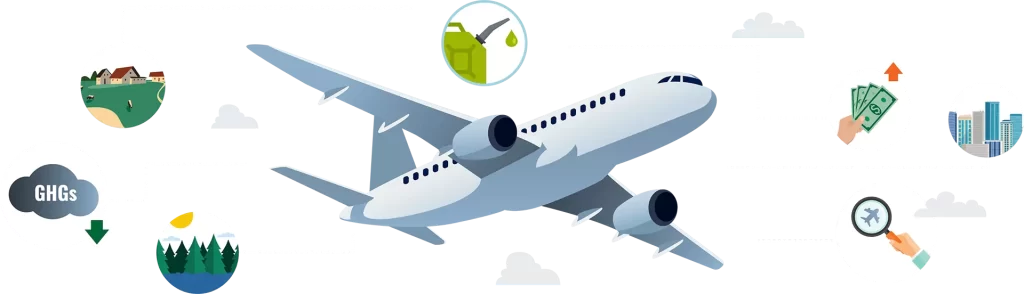
Flying comes at a steep cost to our climate — but a solution is ready for take-off. To put the industry on a more sustainable flight path, SABA is accelerating investment in and adoption of sustainable aviation fuels (SAF).
Our Approach
SABA is working to ensure SAFs have a clear flight-path to help companies address their climate emissions from air travel.
Developing A High-Integrity
SAF Sustainability Framework
SABA-approved SAF guarantees credible emissions reductions and safeguards against negative effects on ecosystems and communities.
Accelerating and Aggregating
Investment in SAF
Companies aiming to reduce their air travel emissions have an opportunity to lead the way to cleaner skies.
Building Transparent and Credible Tracking Systems
Airlines, companies, and eventually individual travelers will be able to track emissions reductions from feedstock sourcing until they are claimed towards climate commitments.
About SAF
What is SAF?
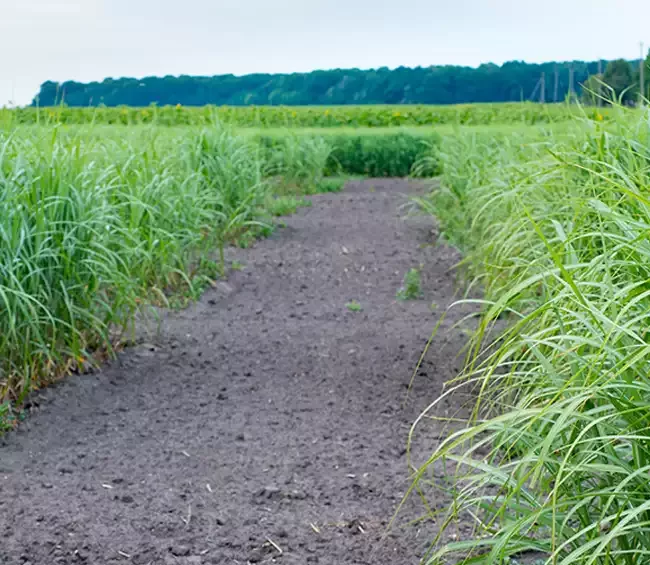
Unlike fossil jet fuel, SAF is produced from renewable sources or waste feedstocks, including crops like switchgrass or poplar, or waste materials such as used cooking oil or municipal solid waste.
If aviation were a nation, it would be among the top 10 largest emitters. As air transport emissions are expected to double from pre-COVID levels by 2050, the aviation industry needs a near-term climate solution to rapidly decarbonize.
Switchgrass
Why is focusing on high integrity important for SAF?
SAF provides a climate benefit when it reduces lifecycle GHG emissions compared to fossil jet fuel. However, not all SAF is created equal. Some can lead to greater emissions than the fossil jet fuel it is meant to replace or cause negative effects on ecosystems and communities. This makes a robust sustainability framework critical to ensure the uptake of high-integrity SAF.
Interested in getting involved
in our mission to accelerate
net-zero aviation?